How to Maintain a Sustainable Closet
The clothing industry is by far one of the most wasteful, and much of this has to do with a consumer culture of disposability, in which garments are seen as easy-come, easy-go commodities that should be discarded if they’ve already been worn in photos, if the buttons have come undone, or if the trends are no longer trending.
Clothing is personal, and a sustainable closet will look different depending on your tastes, career, and lifestyle. But a few fundamentals apply, like avoiding whim purchases and taking care of your clothes.
Shop your closet first
The most sustainable way to shop clothing is, of course, to buy nothing at all. Oftentimes, the solutions to our outfit problems lie within our wardrobes. Adding a belt or other accessory, experimenting with how you tuck things in or roll things up, and adding layering can all drastically change the proportions and tensions of an outfit.
Shop secondhand second
There are already so many garments out there, we really don’t need new ones—and clothes that have history and patina lend our wardrobes more character. Clothing swaps, thrift stores, and vintage shops are all great places to source secondhand pieces.
If you can’t find what you’re looking for in person, online vintage sites and sellers on Etsy, DePop, ThredUp, Poshmark, and eBay will probably have it—but do come with the added environmental cost of shipping and packaging.
Avoid fast fashion
When you do purchase new clothes, avoid fast fashion sites that tend to have murky supply chains and questionable labor practices. If we’re paying $5 for a tee shirt, changes are that someone is only making pennies off that work. It’s important to know that unlike some commodities, clothes aren’t machine-manufactured; they require actual people to make them.
Not all fast fashion is strictly cheap in price, making it harder to spot. In general, it’s best to avoid websites that offer hundreds of clothing choices and that are constantly advertising new items.
Look at landfill
This one might seem unpleasant, but it’s striking to see the many tons of clothing that end up in landfills around the world. At the point of purchase, we’re so divorced from seeing the reality of the fast fashion landscape. Facing photos and videos from every point in the fashion process, from labor to freight to landfill, can inspire you to reject purchases you might otherwise have made.
Avoid adding to landfill
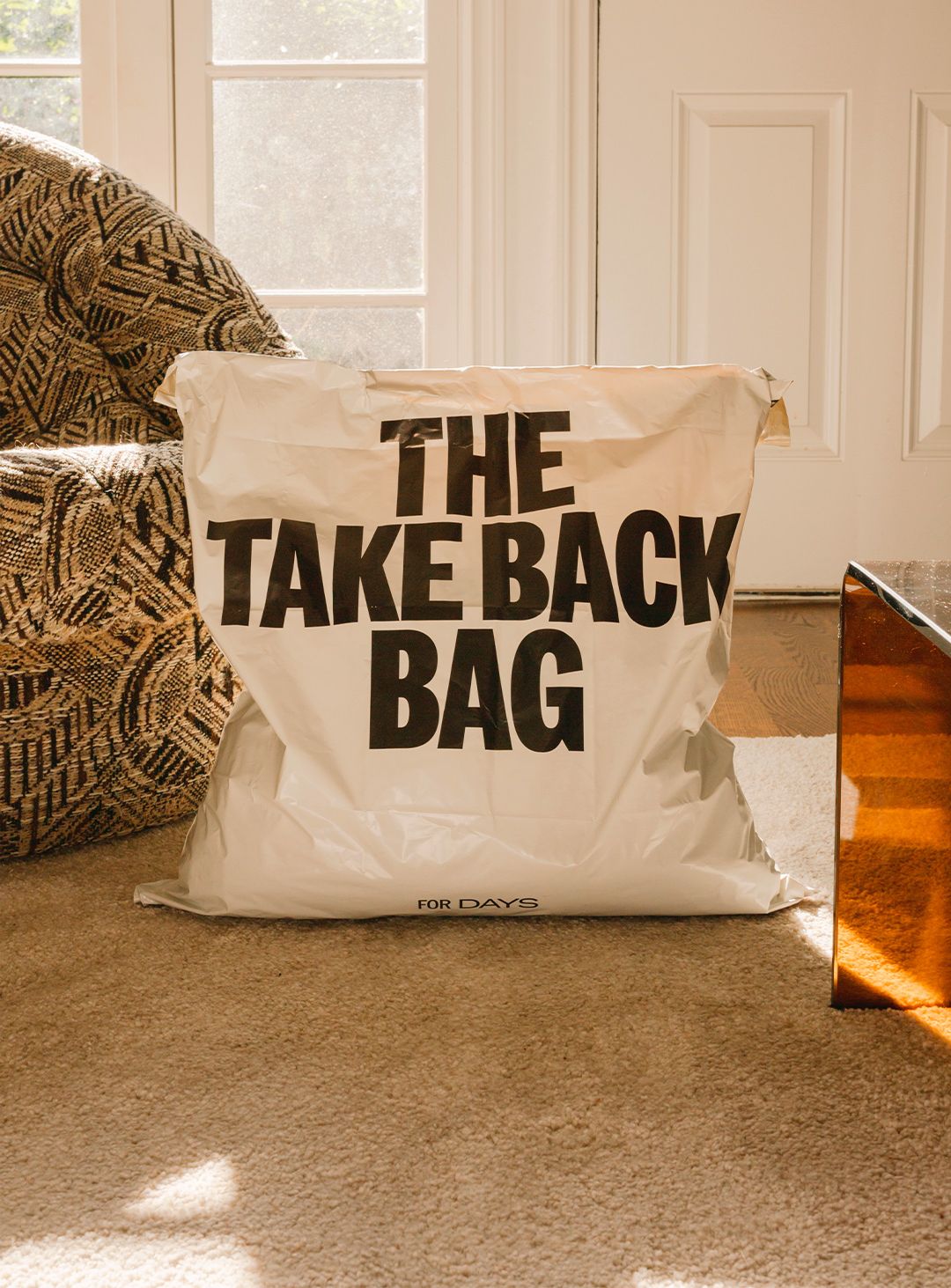
Have under-worn (or unwearable) clothes you need to get rid of? You can donate them sustainably using our For Days Take Back Bag.
Not all fast fashion is strictly cheap in price, making it harder to spot
How it works: Buy a Take Back Bag and fill it with up to 15 pounds of clean, dry clothes, bags, shoes, accessories, and home textiles in any condition. Send it off for free by scanning the QR code for shipping instructions, and register your bag to earn their rewards for gift cards.
This helps keep clothing out of landfills while helping you maintain a clean, organized closet full of things you actually wear.
Assess what you get rid of
When you get rid of clothing items, it’s helpful to take stock of why you’re letting go. Was it a problem of fit? Did it fall apart because the quality was poor? Did it not suit your lifestyle, or feel false in some way? Was it a trend you no longer like? Answering these questions can help you make informed shopping decisions in the future to lead to less closet turnover.
Don’t buy just to try
When we buy multiple sizes of a garment from a website and then return the ones that don’t fit, these returns don’t simply go back onto virtual shelves but often end up becoming waste. It’s better to read reviews to know how items are fitting, and for smaller brands, reach out to customer service if you have any questions.
Know your measurements
On that subject, knowing your measurements (and the measurements of clothes that fit you well) is an important part of sustainable style. Most standard are details like waist size, inseam, and bra size, but equally important are shoulder length, bust, hip, and the rise that fits best. It’s hugely helpful to take the measurements of pieces you have that fit you really well.
Having all of these listed in your phone or computer notes will help you make good shopping choices. Don’t be afraid to ask vintage sellers for measurements to avoid making a purchase that doesn’t work.
Support ethical brands
There are many small brands out there that have designed ingenious ways to upcycle used or deadstock fabric, and who use good labor practices. Do a little research on a site’s page to find out how they source their materials and how (and wear, and who by) their items are made. Sites like Good On You can also be a resource for quickly searching more ethical brands and comparing how fashion retailers stack up.
Wait before buying
There are several methods to stave off whim purchases. One is to keep a wishlist each month of the things you’re coveting, and only go back after three months, six months, or a year to see what you kept coveting that makes the shortlist. After a timespan of not buying anything, you’ll notice your monthly wishlist get smaller.
Another is the opposite: to never add anything to a list, board, or a cart. The idea is, if you really want or need it, you’ll put in the work to find it again.
Choose natural fibers
Many clothing textiles are made using synthetic fibers, aka plastic (think nylon, polyester, acrylic, spandex, and elastane) that can fall apart during wash cycles and end up in our waterways as microplastics. (You may also not want plastic fibers on your skin all day, especially around private parts).
Look for natural fabrics like cotton, linen, hemp, silk, and wool, and opt for longer fibers that will hold up to washing and wearing.
Curious about sustainable materials? Read more on our glossary.
Consider a capsule wardrobe
Not every sustainable wardrobe needs to be a capsule, but taking a minimalist approach to dressing can help you limit dressing time, decision fatigue, and waste from purchases that don’t work with what you already own.
It’s hugely helpful to take the measurements of pieces you have that fit you really well
Everyone’s capsule will be different, but having some logic to your closet can help you see what’s truly needed, what does the heavy lifting, and what purchases wouldn’t get much actual use.
Shop for the life you actually live
One reason our clothes can sit around in the closet is if we’re shopping for a different lifestyle than the one we actually have. If you only go to two weddings a year, you likely don’t need more than two wedding guest dresses, or if you work from home and don’t regularly go to business meetings, you may not need any blazers.
Take care of your clothes
We’ve covered the ins and outs of sustainable laundry before, but here are some pointers for keeping your clothes (especially vintage clothes) in good condition so they don’t become unwearable.
Read the labels
Read the wash care labels. In fact, read the wash care labels before you buy a piece so you can make sure it fits with your lifestyle. (Never have time to go to the dry cleaners? Then you’ll know not to buy a basic that is dry-clean only.) Some pieces, like cashmere sweaters, are far from forgiving and will need special care.
Wash on cold
Cold water is one of the keys to helping ensure that the fibers and colors of your clothes don’t fall apart faster than they should—and it also saves energy. For an earth-friendly and non-toxic alternative to traditional laundry detergents, we have an option for every preference:
- laundry liquid in unscented, citrus, and ylang ylang
- laundry powder in unscented and lavender
- detergent sheets in gem, moss, smudge, and lull
- stain & odor laundry detergent pods in unscented
Limit dryer use
Not only does the dry cycle require a lot of energy, but it can also do a lot of damage to certain clothing items, from shrinking to bacon fly. What’s more, dryers also cause unneeded friction between clothes, loosening their fibers. Read the care label and when possible, air dry clothes on a drying rack or even a line outside. Bonus: sunshine is great at helping remove stains from your whites. Just be careful the sun doesn’t fade your more vibrant colors.
When possible, air dry clothes on a drying rack or even a line outside
When you do use the dryer, we recommend our wool dryer balls as a safe, sustainable alternative to disposable dryer sheets.
Turn dark clothes inside out
For darker or more saturated pieces, turn them inside out to concentrate the washing on the parts that are dirtiest and to keep color intact for longer.
Learn light mending
Sometimes a quick fix is all you need to make a garment wearable again. Learning the basics of sewing on a button or patching a hole with embroidery can carry your sustainable wardrobe, and your budget, a long way.
Find a tailor
Oftentimes, we’re loath to let go of a great piece, but never wear it because it doesn’t fit just right or otherwise needs some love. Establishing a relationship with a good tailor and a good cobbler can help you get more wear and rewear out of your favorite pieces, even preserving them or tweaking them so they can be passed down to loved ones later.
Store clothes properly
Clothes want to breathe, so storing them in plastic is usually not best. Keep your clothes somewhere they’ll receive good air flow and where they can be organized in a way that won’t damage or wrinkle them beyond repair. Always fold, never hang sweaters to avoid the knits from getting stretched, and organize socks by folding them instead of tubing them inside out, so that they don’t become too loose.
Look for natural fabrics like cotton, linen, hemp, silk, and wool, and opt for longer fibers that will hold up to washing and wearing
Building a sustainable closet is largely about what’s not in it: whim purchases and wasted pieces that never got worn because they don’t reflect our actual needs.
Whether you’re a minimalist with a capsule wardrobe or a vintage trader with a colorful closet, the basic takeaway is the same. Shop secondhand first, take care of your clothes with proper laundering, donate what you don’t use, and always be learning what works and what doesn’t so you can avoid the whim purchase.
- Author:
- Nora Chestnut
- Date:
- Sep 13, 2026
More Articles